7 AI Prompts Every Real Estate Agent Should Be Using
AI isn't replacing real estate agents — it's giving the fast ones an edge
The agents who are closing more deals right now aren't necessarily working harder. They're responding to leads in minutes instead of hours. They're writing listing descriptions that sell instead of describe. They're generating market reports while their competitors are still pulling comps manually.
Here are seven prompts you can copy, paste, and start using today. All of them work with free tools like ChatGPT or Claude.
1. The listing description that sells
Most listing descriptions read like a spec sheet. Buyers don't connect with spec sheets. They connect with stories.
Prompt: "Write a compelling listing description for a [type of home] at [address]. Key features: [list features]. The ideal buyer is [describe target buyer]. Write in a warm, inviting tone that helps the buyer picture themselves living there. Keep it under 200 words."
Why it works: Telling the AI who the buyer is changes everything. A listing aimed at young families reads completely differently from one aimed at downsizing retirees — even for the same property.
2. The instant lead response
Speed to lead is everything in real estate. The first agent to respond gets the client 78% of the time. But crafting a personal response to every inquiry takes time you don't have.
Prompt: "Write a friendly, professional response to a buyer who just inquired about [property address]. Mention one specific feature of the home they'd appreciate. Offer to schedule a showing this week. Keep it under 100 words and sound like a real person, not a template."
Why it works: This gives you a personalized response in seconds. Edit it slightly for your voice and send it. The lead gets a response in minutes, not hours.
3. The neighborhood guide
Buyers don't just buy a house — they buy a neighborhood. A good neighborhood guide positions you as the local expert and gives you content for social media, email newsletters, and your website.
Prompt: "Write a neighborhood guide for [neighborhood name] in [city]. Cover the vibe, walkability, best restaurants and coffee shops, schools, parks, and what type of buyer it's best for. Write it as if you're a local sharing insider knowledge. Keep it under 400 words."
Why it works: This produces content you can repurpose everywhere — your website, Instagram captions, buyer emails, and listing presentations.
4. The market update email
Your sphere of influence needs to hear from you regularly, but writing a monthly market update from scratch is a chore. AI makes it a five-minute task.
Prompt: "Write a short, conversational market update email for [city/neighborhood] for [month/year]. Include these stats: [median price, inventory, days on market, etc.]. Explain what the numbers mean for buyers and sellers in plain language. End with a soft call to action. Keep it under 250 words."
Why it works: You provide the data, AI provides the narrative. Your clients get an email that sounds like you wrote it over coffee — not something a robot generated.
5. The social media content batch
Consistency on social media wins. But coming up with fresh content every day is exhausting. Batch it instead.
Prompt: "Create 5 social media posts for a real estate agent in [city]. Mix of tips for buyers, tips for sellers, and local highlights. Each post should be under 100 words. Include a hook in the first line that stops the scroll. Make them sound conversational, not salesy."
Why it works: Five posts in two minutes. Edit them for your voice, add photos, and you've got a week of content handled.
6. The open house follow-up
The fortune is in the follow-up, but most agents send the same generic "thanks for coming" email to everyone. Personalize it at scale.
Prompt: "Write a follow-up email to someone who attended an open house at [address]. They mentioned they liked [specific feature]. Acknowledge that, mention one other feature they might not have noticed, and offer to answer any questions. Keep it warm and under 100 words."
Why it works: Even a small personal detail — "I noticed you spent time looking at the backyard" — transforms a generic follow-up into a relationship builder.
7. The CMA narrative summary
A good CMA doesn't just show data — it tells a story. Use AI to turn your comps into a narrative your sellers will actually read.
Prompt: "I'm preparing a comparative market analysis for a home at [address]. Here are the comparable sales: [list 3-5 comps with prices, square footage, and sold dates]. Write a brief narrative summary that explains what these comps suggest about the right listing price. Write it for a homeowner, not a real estate professional."
Why it works: Sellers read the narrative. They skim the spreadsheet. Give them both, and you look more professional than 90% of agents out there.
Start with one
Don't try all seven at once. Pick the one that addresses your biggest bottleneck — slow lead response, stale social media, or tedious listing descriptions — and use it this week. Once it's part of your routine, add the next one.
Go deeper
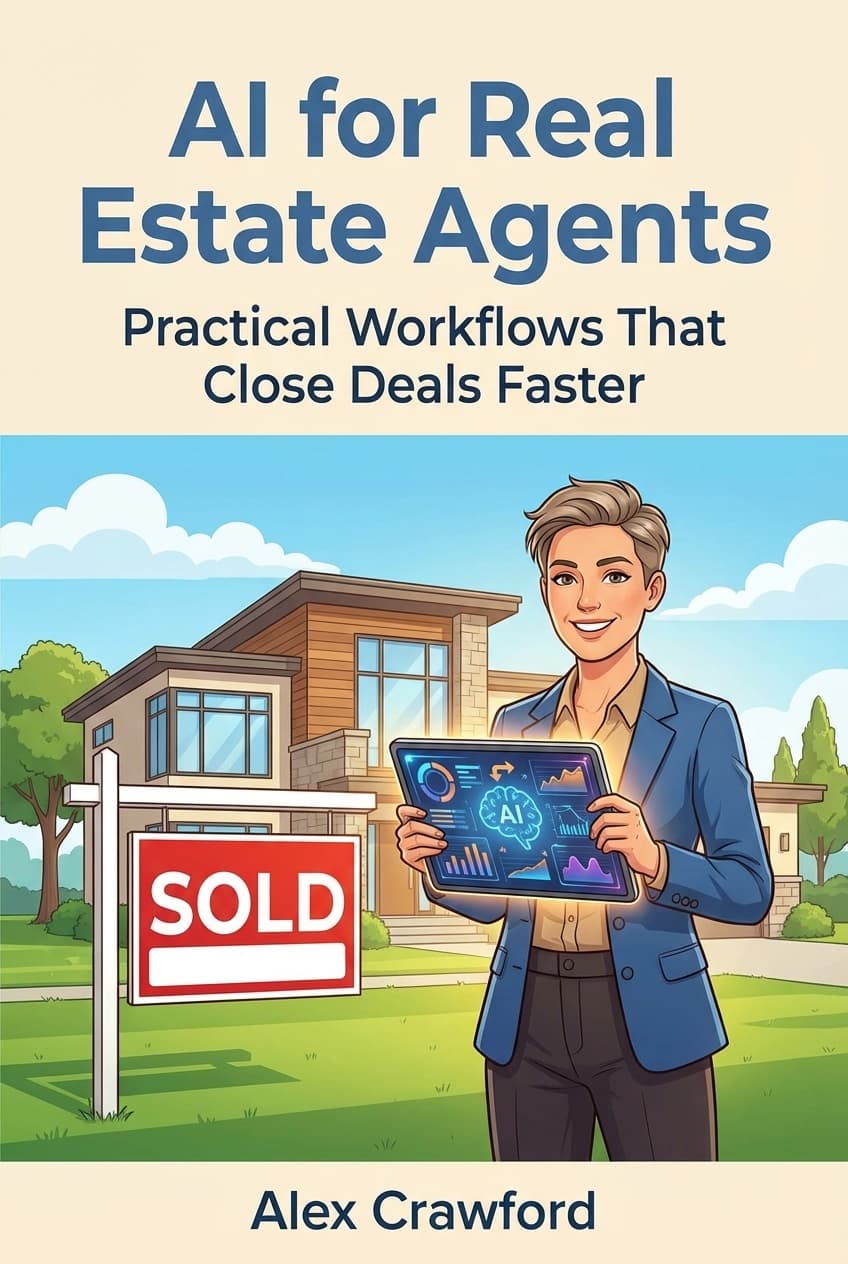
These prompts scratch the surface. For complete workflows covering listing presentations, buyer consultations, market analysis, transaction coordination, and marketing — plus 5-minute exercises for every chapter — check out AI for Real Estate Agents: Practical Workflows That Close Deals Faster.