AI for Restaurant Owners: Prompts That Save Hours Every Week
Restaurant owners don't need another tool — they need fewer tasks
You're already juggling food costs, staffing, health inspections, marketing, and a hundred customer interactions a day. The last thing you need is another piece of software to learn. That's why the best AI approach for restaurant owners isn't a fancy platform — it's a free tool and a handful of prompts that knock out the admin work you've been doing at midnight.
Here are prompts you can copy, paste, and use with ChatGPT or Claude right now. No subscription required.
Responding to online reviews in seconds
Reviews drive decisions. 94% of diners check reviews before choosing a restaurant. But responding to each one thoughtfully takes time — especially the negative ones, where your response matters most.
For positive reviews:
"Write a short, warm thank-you response to this restaurant review. Mention something specific from their review. Keep it under 50 words and sound like a real restaurant owner, not a corporate template. The review: [paste review]"
For negative reviews:
"Write a professional, empathetic response to this negative restaurant review. Acknowledge their experience without being defensive. Offer to make it right. Keep it under 75 words. The review: [paste review]"
Time saved: Responding to a week's worth of reviews goes from 45 minutes to 10 minutes.
Generating a month of social media content in one sitting
Consistency on social media matters, but most restaurant owners post when they remember — which means they don't post. Batch it in one session.
"Create 12 social media posts for an independent [cuisine type] restaurant called [name] in [city]. Mix of: behind-the-scenes kitchen content, featured dishes, staff spotlights, local shoutouts, and seasonal specials. Each post should have a hook in the first line, be under 80 words, and include 3-5 relevant hashtags. Make them sound genuine, not corporate."
That's three posts a week for a month. Pair each one with a photo from your phone, and you've got a content calendar that took less time than prepping one mise en place station.
Optimizing your menu descriptions
Menu descriptions sell dishes. Flat descriptions leave money on the table.
"Rewrite these menu descriptions to be more appetizing and specific. Use sensory language — taste, texture, aroma. Mention preparation methods and key ingredients. Each description should be 15-25 words. Current descriptions: [paste your menu items]"
The difference between "Grilled Chicken" and "Herb-crusted free-range chicken, grilled over oak and served with roasted garlic jus" is a $4 price increase that nobody questions.
Analyzing food costs
Food cost management is the difference between a restaurant that survives and one that thrives. AI can help you spot problems you might miss in a spreadsheet.
"Here are my food costs for the past month: [paste item costs, sales prices, and quantities sold]. Calculate the food cost percentage for each item. Flag any items above 35%. Suggest three ways to improve profitability on the highest-cost items without removing them from the menu."
Creating staff schedules
Scheduling is a puzzle every week. Give AI the constraints and let it suggest a starting point.
"Create a weekly schedule for [number] staff members at a restaurant open [hours/days]. Here are each person's availability: [list availability]. We need [minimum coverage requirements]. Prioritize fairness in shift distribution. Flag any gaps."
You'll still need to adjust — AI doesn't know that Jake and Maria shouldn't work the same Friday shift. But starting from a reasonable draft beats starting from a blank grid.
Writing job postings that actually attract applicants
Restaurant job postings are notoriously bad. "Looking for a hardworking team player" describes every job ever posted. Stand out.
"Write a job posting for a [position] at an independent [cuisine type] restaurant. Highlight what makes this a good place to work: [list actual perks — meal discount, flexible scheduling, growth opportunities, team culture]. Be honest and specific. Keep it under 200 words."
The bottom line
These prompts won't run your restaurant. But they'll handle the administrative work that keeps you at your desk when you should be on the floor — or at home. Every prompt here works with a free AI account. No new software, no monthly fee, no learning curve.
Go deeper
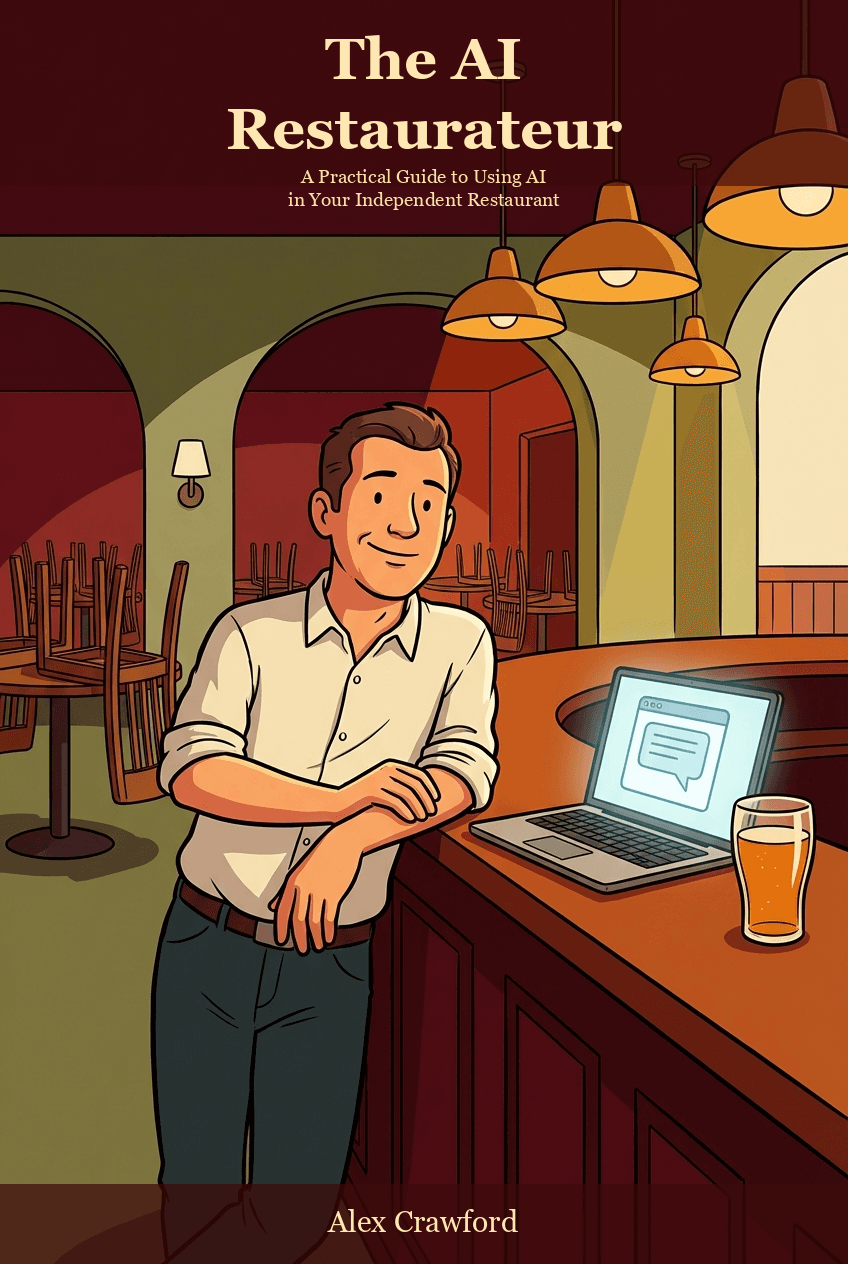
For 85 copy-paste prompts covering reviews, social media, reservations, menus, food costs, staffing, operations, and business intelligence — check out The AI Restaurateur: A Practical Guide to Using Artificial Intelligence in Your Independent Restaurant.