5 Real Tools Small Business Owners Built with AI This Year
You do not need to be a developer to build tools
The gap between having an idea and having a working tool used to be thousands of dollars and weeks of development time. That gap is closing fast.
Here are five tools built by non-technical business owners this year. Each one solved a problem that off-the-shelf software could not handle.
1. A custom quote calculator for a landscaping company
The problem. The owner spent 45 minutes on every quote, factoring in material costs, labor rates, seasonal pricing, and travel distance. Most quotes were done on paper.
The solution. A web-based quote calculator that takes property size, service type, location, and add-ons as inputs. It applies her pricing rules automatically, factors in current material costs, and generates a professional PDF quote the client can approve with one click.
Tools used. Replit for building the app, Claude for generating the code, and Google Sheets as a backend for pricing data she can update without touching the code.
Result. Quotes now take five minutes. She sends them from the job site on her phone.
2. A self-service booking system for a dog grooming business
The problem. Phone tag. Clients called to book appointments, the groomer was busy with dogs, calls went to voicemail, callbacks happened hours later, and clients booked elsewhere in the meantime.
The solution. An online booking system with service selection, breed-based pricing, availability display, and automated confirmation emails. Clients book and pay a deposit without ever calling.
Tools used. Bolt for the frontend, Stripe for payments, and Google Calendar API for availability syncing. AI handled the entire build through conversational prompting.
Result. Phone calls dropped by 70 percent. Booking volume increased because clients could book at midnight when they remembered.
3. A daily metrics dashboard for a food truck operation
The problem. The owner tracked sales on a notepad and did not know which locations, menu items, or days of the week were most profitable. Decisions were based on gut feel.
The solution. A simple dashboard that pulls daily sales data from Square, displays revenue by location and item, calculates food cost percentages, and highlights trends over time. One screen shows everything that matters.
Tools used. Cursor for the build, Square API for sales data, and a simple database to store historical numbers. AI wrote the data connections and visualization code.
Result. The owner discovered that two menu items were losing money and one location was consistently underperforming. Cutting both improved margins by 15 percent within two months.
4. A voice agent for after-hours calls at a plumbing company
The problem. Emergency plumbing calls come at all hours. The owner was either answering calls at 2 AM or losing business to competitors who did.
The solution. An AI voice agent that answers after-hours calls, asks qualifying questions about the issue, determines urgency, and either books a next-day appointment or pages the on-call plumber for true emergencies.
Tools used. Vapi for the voice agent platform, Make for the workflow automation, and Google Calendar for appointment scheduling. The AI was trained on the company's most common call scenarios.
Result. The owner sleeps through the night. Emergency calls still get routed immediately. Routine calls get booked automatically. No more lost business at 2 AM.
5. An internal knowledge base for a growing accounting firm
The problem. The firm had 12 employees and no central place for procedures or process documentation. New hires took months to get up to speed because everything lived in people's heads.
The solution. An internal tool where team members search procedures and process documents using natural language. Ask how to handle a specific tax situation and it pulls the relevant procedure.
Tools used. Replit for the interface, an AI embedding model for search, and the firm's existing documents as the knowledge source.
Result. New hire onboarding time dropped from three months to six weeks. Senior staff stopped answering the same questions repeatedly.
The pattern
Every one of these builds followed the same pattern. A business owner identified a specific pain point, described the solution to an AI tool, iterated until it worked, and deployed it. No computer science degree. No development agency. No six-month project timeline.
Go deeper
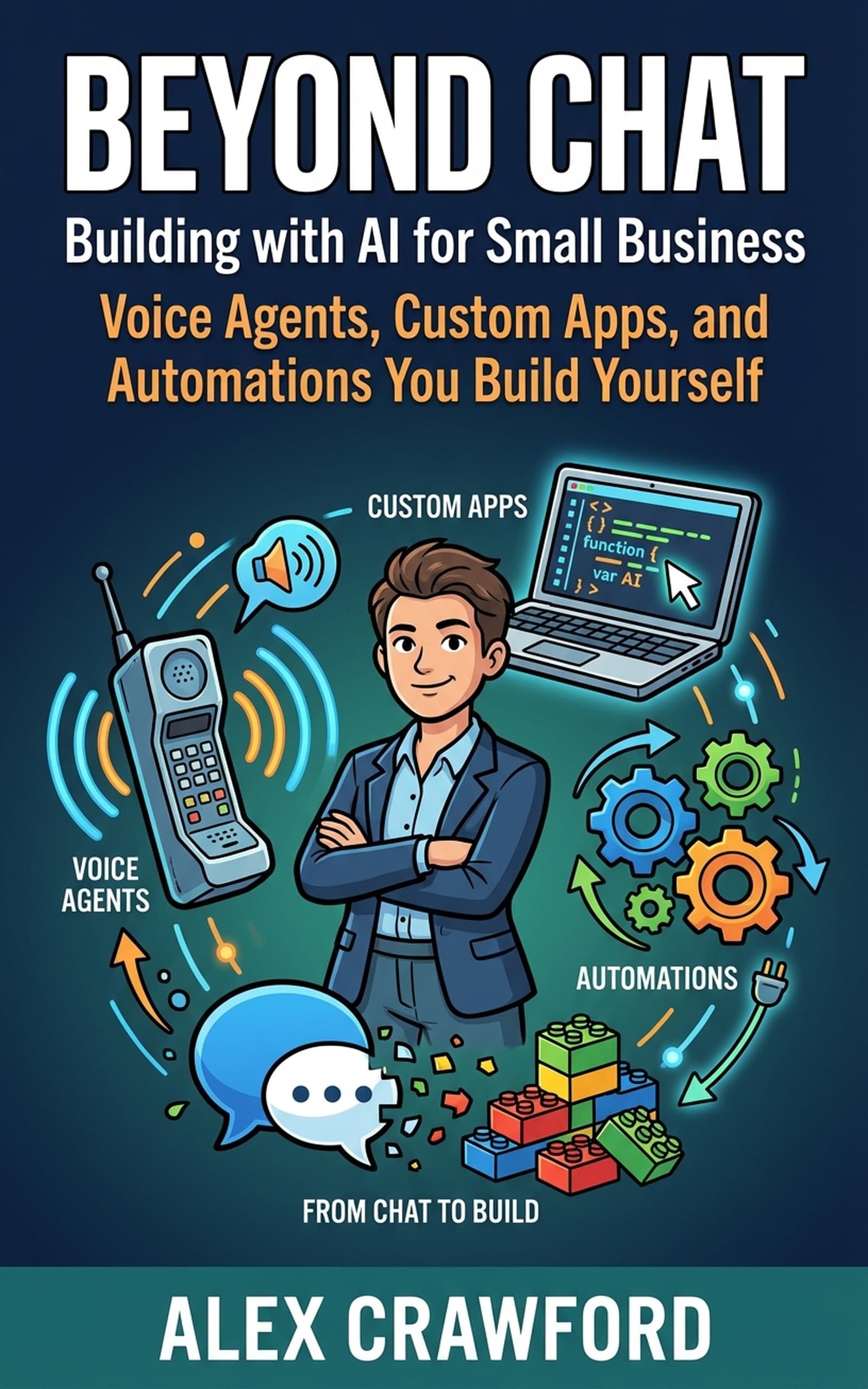
For step-by-step instructions on building tools like these, including prompt templates, tool recommendations, and project blueprints for non-technical founders, check out Beyond Chat: Building with AI for Small Business. It walks you through your first build from idea to deployment.