AI for Board Reports: Cut Your Sunday Night Prep in Half
The Sunday night board packet ritual
If you lead a nonprofit, you know the pattern. Board meeting is Tuesday. Sunday night you're at your kitchen table pulling together the packet: financials, program updates, fundraising dashboard, ED report. It takes four to five hours because you're not just compiling data — you're translating it into a narrative that busy board members can absorb in 20 minutes.
AI won't attend your board meeting for you. But it can cut that Sunday night prep from five hours to two.
Start with a data gathering template
The biggest time sink isn't writing — it's hunting. Financial data is in QuickBooks. Program metrics are in a spreadsheet. Fundraising numbers are in your CRM. Event attendance is in someone's email.
Build a standard data intake template that you fill in before you write anything:
- Revenue: Year-to-date actual vs. budget. Major gifts received. Grant status updates.
- Expenses: Year-to-date actual vs. budget. Any significant variances.
- Cash position: Current bank balance. Months of operating reserves.
- Program metrics: Participants served, outcomes achieved, waitlist numbers.
- Fundraising: Campaign progress, donor retention rate, upcoming asks.
- Upcoming: Key dates, decisions needed from the board, risks or opportunities.
Fill this template with raw numbers and bullet points. Don't write prose yet. Just get the data into one place. This step alone saves an hour because you stop switching between six different tabs and apps.
Generate the financial summary
Board members who aren't finance professionals need financials translated. A budget-to-actual table alone doesn't tell them what they need to know.
"Here are our year-to-date financials: [paste revenue and expense data with budget comparisons]. Write a financial summary for a nonprofit board audience. Lead with the overall position — are we ahead or behind budget? Then cover: revenue highlights (what's on track, what's lagging), expense highlights (any significant variances), and cash position. Use plain language. Board members are smart but most are not accountants. Keep it under 300 words."
Review the output for accuracy. The AI might misinterpret a positive variance as negative or overlook context you know — like the fact that a grant payment is late but confirmed. Add those details. But the structure and language are already 80% there.
Draft the program updates
Program directors can usually tell you what's happening, but getting them to write a board-ready summary is another story. AI bridges that gap.
Collect brief bullet points from each program lead. Then:
"Here are program updates from our three core programs: [paste bullet points for each program, including participant numbers, key activities, outcomes, and any challenges]. Write a board-ready program update section. For each program, include: a 2-sentence overview of progress this quarter, one key metric with context, and one item that needs board awareness (a challenge, opportunity, or decision point). Keep the tone professional but warm — this is a mission-driven organization."
This turns scattered bullet points into a coherent narrative. Your program directors save time, and the board gets consistent formatting across programs.
The executive summary prompt
The executive summary is the most important page in the packet. Many board members will read only this page. It needs to be sharp.
"Based on these board report sections — financial summary: [paste], program updates: [paste], fundraising update: [paste] — write a one-page executive summary for the board chair to reference when opening the meeting. Structure: 3-4 bullet points on key highlights, 1-2 items requiring board discussion or decision, and a forward-looking statement about the next quarter. Lead with the most important item — good or bad. Do not bury challenges. Board members trust leaders who are transparent."
This is the section you'll edit the most. The AI gives you structure and draft language. You add nuance, context, and the political awareness that only someone inside the organization has.
Format for readability
Board members are volunteers. They're reading your packet between their day job and dinner. Make it scannable.
"Reformat this board report content into a clean, scannable layout. Use headers for each section. Bold key numbers. Use bullet points for lists. Add a one-line summary at the top of each section that a busy reader could skim. Keep the total packet under 6 pages — if any section is too long, tighten it."
Better yet, build a board packet template once and reuse it every quarter. Consistent formatting means board members know exactly where to find the information they care about.
The compounding benefit
The first time you use AI for board prep, you'll save 2-3 hours. The second time, you'll save more — because you'll have last quarter's prompts, your data template will be dialed in, and your board packet template will be ready. By the third or fourth meeting, Sunday night board prep becomes a Monday afternoon task that takes 90 minutes.
Your board gets better reports. You get your weekends back.
Go deeper
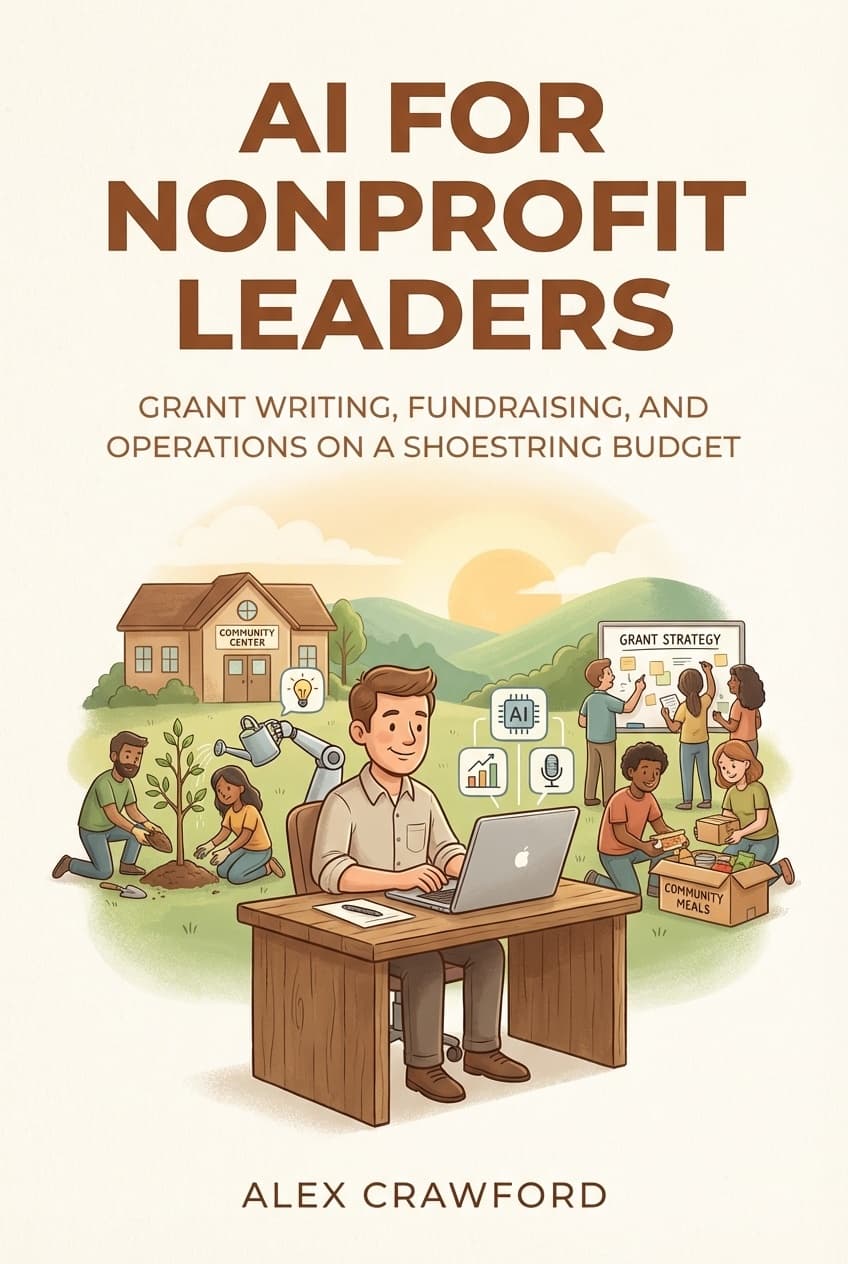
For board reporting templates, executive summary frameworks, and dozens of additional AI workflows for nonprofit operations — from grant writing to volunteer management — check out AI for Nonprofit Leaders: Grant Writing, Fundraising, and Operations on a Shoestring Budget.